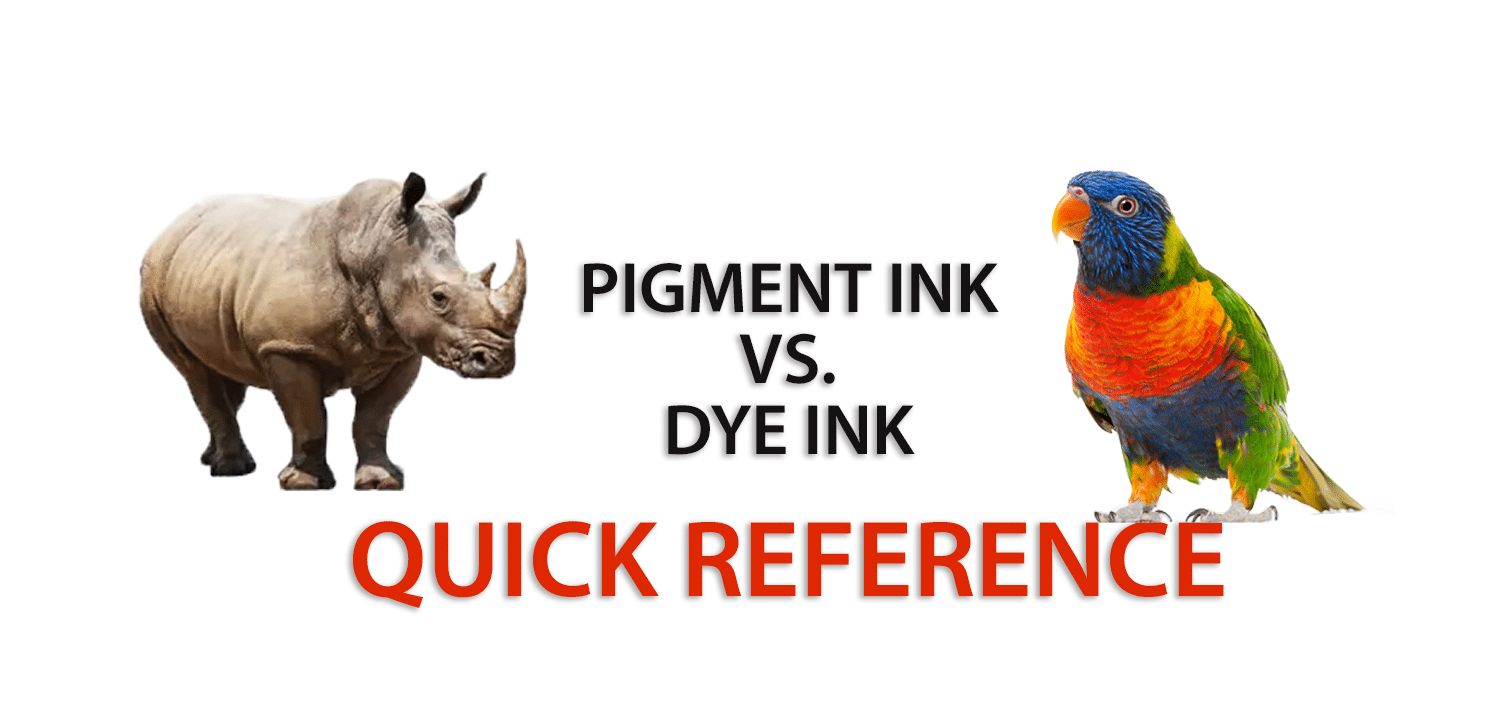
Pigment vs. Dye Ink
You may have seen our blog post “Pigment Ink vs. Dye Ink – Why it Matters”. This post outlines in great detail, the differences between these two popular ink types used primarily for color inkjet label printing.
We’ve assembled a summary of those topics in this post for readers who want a quick explanation of these two ink types, what they are, and why they matter.
Key features of pigment inks:
- Made of synthetic particles suspended in water (and other chemicals)
- Excellent UV durability
- More color-fast than dye inks (more moisture resistance)
- Less range of color (smaller color gamut)
- Harder to color match
- Generally more expensive
Key features of dye inks:
- Less durable to moisture and abrasion (compared to pigment inks)
- More prone to smudging
- Wider color gamut resulting in more vivid colors
- Deeper/darker blacks
- Clearer/crisper plain text and barcodes
- More susceptible to UV fading
Now that you know the main pros and cons of each ink type, let’s take a look at the main reasons you would want to consider one ink type over the other in terms of how it applies to how and where your labels will be used.
Top reasons to select dye ink for your printing solution:
- Moisture durability is not needed
- The most colorful, vivid artwork is desired
- Better color matching capabilities
- Fine text or barcodes are being used
Top reasons to select pigment inks for your printing solution:
- Moisture durability is required
- Enhanced UV protection
- More abrasion resistance is desired
You may have noticed the main reason for choosing pigment-based inks over dye-based inks… durability.
In most situations, moisture resistance is the primary consideration when choosing between pigment vs. dye ink. For products like wine, beer, health and beauty, and any other items that may live in high moisture environments or encounter moisture at some point, it is highly unlikely you’ll be able to use dye-based inks without issues. Pigment-based inks (or “Plus” dye inks mentioned below) are your only option.
Final thoughts for making the best decision on pigment vs. dye inks
In recent years, the advantages and disadvantages of each ink type have narrowed. Dye ink manufacturers have found ways to make their dye more durable to moisture and UV (see “plus” inks below) and pigment inks have become cheaper to produce.
Color depth has also been improved with pigment inks. You will typically only notice a difference between the two ink types when you compare a design printed with both inks side by side. On its own and with no dye reference, the pigment-printed designs still look beautiful and professional.
Finally, pay close attention to the ink compatibility of each printer you’re considering when choosing between pigment vs. dye inks. Some printers require a specific ink type while others allow you to switch back and forth easily (like the Afinia L502). Others may offer a dye version only but provide a “Plus” option where their dye inks are formulated to be more water and UV resistant such as the Afinia L901 Plus or VIPColor VP750. These printers may give you the best of both worlds but always make sure to ask for samples of your labels on these printers to be sure the plus inks will be durable enough for your needs.